Federal Identity Proofing for Programs and Contractors: NIST IAL2 and IAL3
NIST IAL3 proofing for FedRAMP High (Class D) programs, attended by trained agents on controlled hardware. IAL3 Kits ship to employee homes and agency offices from what we believe is the largest dedicated IAL3 fleet. Sensitive identity evidence stays inside FedRAMP-authorized, agency-owned, or contractor-managed boundaries. Your ISSO and Authorizing Official get a signed evidence package, and infiltration stops at the point of entry.

IAL3 Requirements Under NIST SP 800-63A-4
NIST IAL3 is the highest identity assurance level in SP 800-63A-4: identity proofing performed on-site and attended by a proofing agent, with biometric collection and retention added to the IAL2 steps.
IAL3 identity proofing SHALL only be delivered as on-site attended. The proofing agent MAY be co-located with the applicant or attend the identity proofing session via a CSP-controlled kiosk or device.
SP 800-63A-4 §4.3.1For identity proofing at IAL3, the CSP SHALL collect:
One piece of FAIR evidence and one piece of STRONG evidence
,Two pieces of STRONG evidence
, orOne piece of SUPERIOR evidence.
§4.3.2The CSP SHALL collect and retain a biometric sample from the applicant during the identity proofing process
§4.3.3The CSP SHALL monitor the entire identity proofing session through a high-resolution video transmission with the applicant.
§4.3.8The CSP SHALL have a live proofing agent participate remotely with the applicant for the evidence collection, evidence validation, and verification steps of the identity proofing process.
§4.3.8Upon the successful completion of identity proofing at IAL3, the CSP SHALL send a notification of proofing to a validated address for the applicant
§4.3.9The CSP SHALL distribute or enroll the subscriber’s initial authenticator during an on-site attended interaction with a proofing agent.
§4.3.10
In these requirements, the CSP (credential service provider) is the proofing provider. Trust Swiftly runs IAL3 sessions to these requirements, on a controlled IAL3 Kit or kiosk at an approved office or home with a trained agent attending. Every requirement, explained: What Is NIST IAL3?
The federal identity crisis — and how to solve it
The Federal Problem
Legacy PIV/CAC issuance takes weeks, stalling mission-critical remote contractors. NIST SP 800-63A-4 now bars knowledge-based verification (KBV) for identity proofing — yet legacy programs still lean on credit-bureau quizzes that AI deepfakes defeat and that lock thin-file applicants out of government services. Meanwhile, multi-tenant SaaS identity platforms force agencies to hand over sensitive biometric PII to external environments — creating massive cyber risk and violating Zero Trust principles.
The Trust Swiftly Capability
An agile Identity Proofing Engine delivering continuous anti-spoofing & deepfake defense, IAL2/IAL3-aligned document vetting, and dynamic routing — helping legitimate users move quickly while suspicious sessions are escalated. Deploys inside FedRAMP-authorized cloud infrastructure for full data sovereignty without the burden of self-hosted infrastructure.
Built for NIST SP 800-63A-4 IAL3 programs that need controlled hardware, documented chain of custody, and a defensible operating model that helps protect CUI and mission-critical networks.
Security architecture built for federal contractors and teams pursuing FedRAMP
Trust Swiftly combines high-assurance identity proofing with hardened control signals that support ISSOs, CISOs, and mission-security stakeholders — aligned to Executive Order 14028 (Zero Trust Architecture) and OMB M-22-09 (Federal Zero Trust Strategy).
NIST SP 800-63A-4 Aligned
Designed to support high-assurance proofing controls, stronger evidence capture, and a defensible controlled capture path.
IA-12 Evidence for Every Session
A signed evidence package for each IAL3 session, mapped to IA-12 for programs pursuing FedRAMP High (Class D).
SOC 2 Type II
Independent control validation reinforces operational discipline, evidence handling, and process consistency.
ISO 27001
Supports mature governance around information security management, asset handling, and continuous control review.
Mission coverage
Reach headquarters staff, rural hires, field teams, and distributed contractors without limiting proofing to a handful of facilities.
Defensible evidence chain
Generate chain-of-custody artifacts and proofing records that stand up to ISSO review, RMF assessment against NIST SP 800-63A-4, and counter-infiltration programs.
Flexible operating control
Use managed kits, field-ready kiosks, or government-owned hardware and internal staffing without changing the core proofing platform.
Equitable access without travel
Enable homebound, disabled, and geographically remote applicants to complete identity proofing without traveling to a fixed enrollment site.
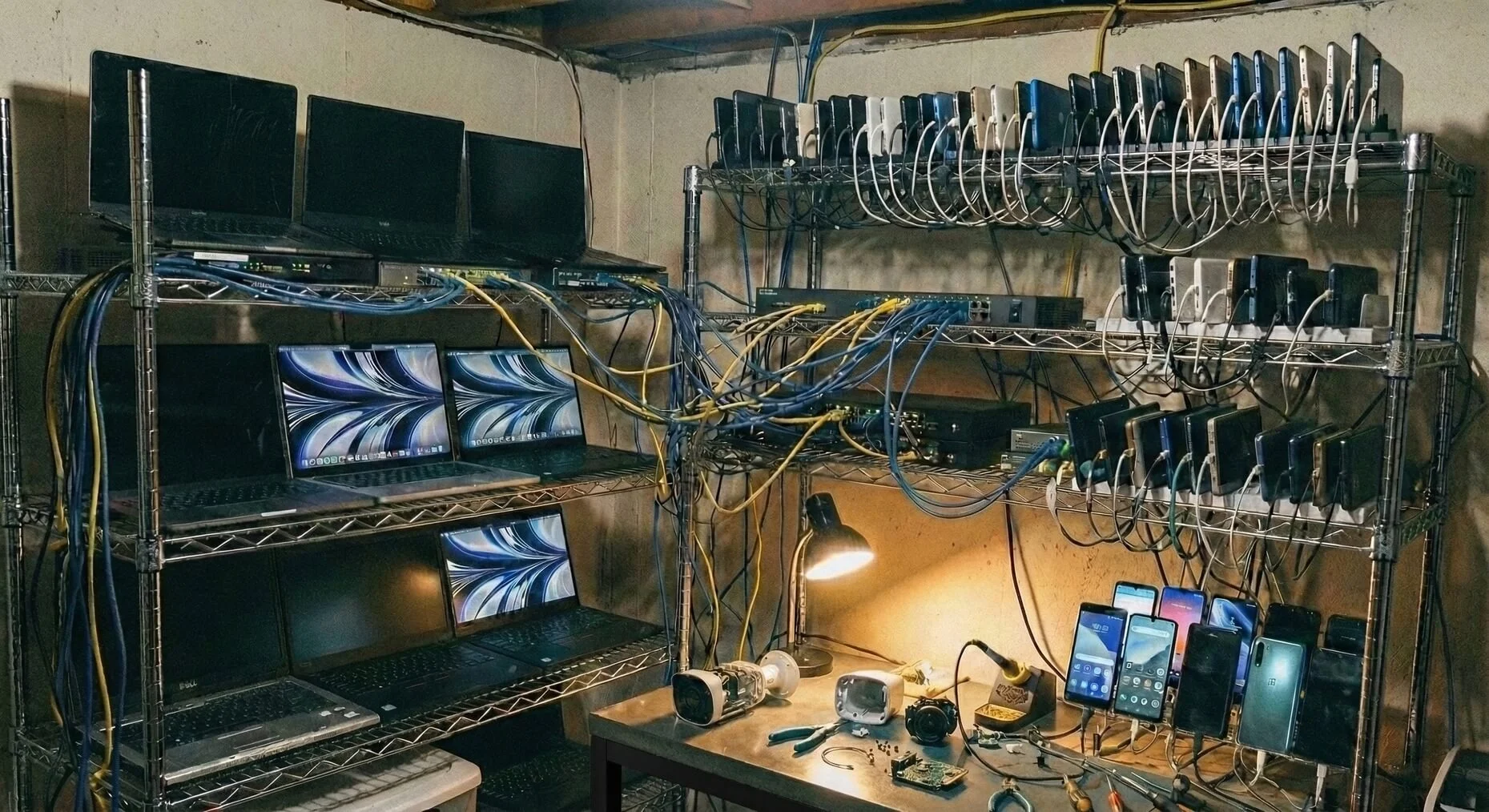
Modern fraud rings industrialize the endpoint. NIST SP 800-63A-4 requires IAL3 sessions to be attended, with capture on hardware the proofing provider controls. When agencies cannot prove control of the device, camera stack, network path, and capture flow, adversaries exploit the gap to plant operatives, exfiltrate CUI, and compromise mission networks.
Software-only and BYOD proofing leave missions exposed to infiltration and IP theft
Federal identity proofing is now a security and counter-intelligence problem as well as an onboarding task. Nation-state-backed fake IT worker schemes, proxy interviewing, synthetic identities, and AI-enabled impersonation all raise the cost of relying on unmanaged devices and low-control workflows.
Why uncontrolled devices are a threat
Without controlled hardware, agencies cannot rule out virtual camera injection or AI-deepfakes during the interview, and adversaries exploit the gap to infiltrate mission-critical systems.
Why controlled deployment protects the mission
IAL3 Kits, Office Kiosks, and agency-operated hardware let agencies document chain of custody, operating control, and staffing decisions, giving mission owners verifiable assurance against insider threats and synthetic identities.
Travel-heavy enrollment slows readiness. Applicants wait for facilities, appointments, and local staffing before work can begin.
Fixed-site models miss distributed reality. Contractors, field personnel, and rural workers still need a trusted, controllable proofing path.
BYOH / BYOA adds operational control. Agencies can minimize supply chain risk, ensure max OPSEC, and keep sensitive interviews strictly in-house.
How attended IAL3 proofing works — from controlled hardware to credential
Every deployment model follows the same NIST SP 800-63A-4 lifecycle, so evidence stays consistent whether hardware is managed, deployed, or government-owned.
Deploy controlled hardware
A pre-configured kit ships to the applicant’s office or home — or agency-furnished equipment is enrolled. Every device is verified before a session can start.
Attended proofing session
A trained agent attends live while the controlled device captures document evidence, NFC chip reads, and biometrics with continuous anti-spoofing.
AAL3 authenticator binding in the same session
While the agent still attends, a phishing-resistant authenticator is bound to the newly proofed identity, as SP 800-63A-4 requires at IAL3. The authenticator is priced separately.
Evidence package sealed
Session artifacts, chain-of-custody records, and control mappings are packaged for ISSO review and Authorizing Official assessment against NIST SP 800-63A-4.
Credential & access decisions
Hand a defensible proofing record to your PIV issuer, IdP, or access program — and re-verify later with step-up proofing when risk changes.
Built for mission-critical federal programs
Support the programs that break under travel bottlenecks, fragmented proofing vendors, low-control BYOD workflows, and the growing threat of nation-state infiltration targeting contractor networks.
Stopping nation-state infiltration and IP theft at the point of entry
Strengthen onboarding before credentials and network access are granted by using supervised proofing, controlled hardware, and evidence that closes infiltration vectors before adversaries gain access to classified systems, CUI, or sensitive research.
DIB and contractor onboarding at scale
Verify systems integrators, subcontractors, and supplier workforce members without forcing every person through a single metro-area or fixed-site credentialing process.
HSPD-12 and PIV support for distributed populations
Support remote and field-based proofing workflows that strengthen identity assurance before credential issuance, especially where traditional enrollment sites create delay.
Step-up verification for recovery, privilege changes, and sensitive access
Use risk-based re-verification when accounts are recovered, privileges are elevated, or high-risk actions require stronger assurance than the original onboarding event.
Choose the operating model that fits your mission and security boundary
One platform, three deployment paths — from fully managed to government-owned and operated. Start with what fits your timeline, then evolve as your program matures.
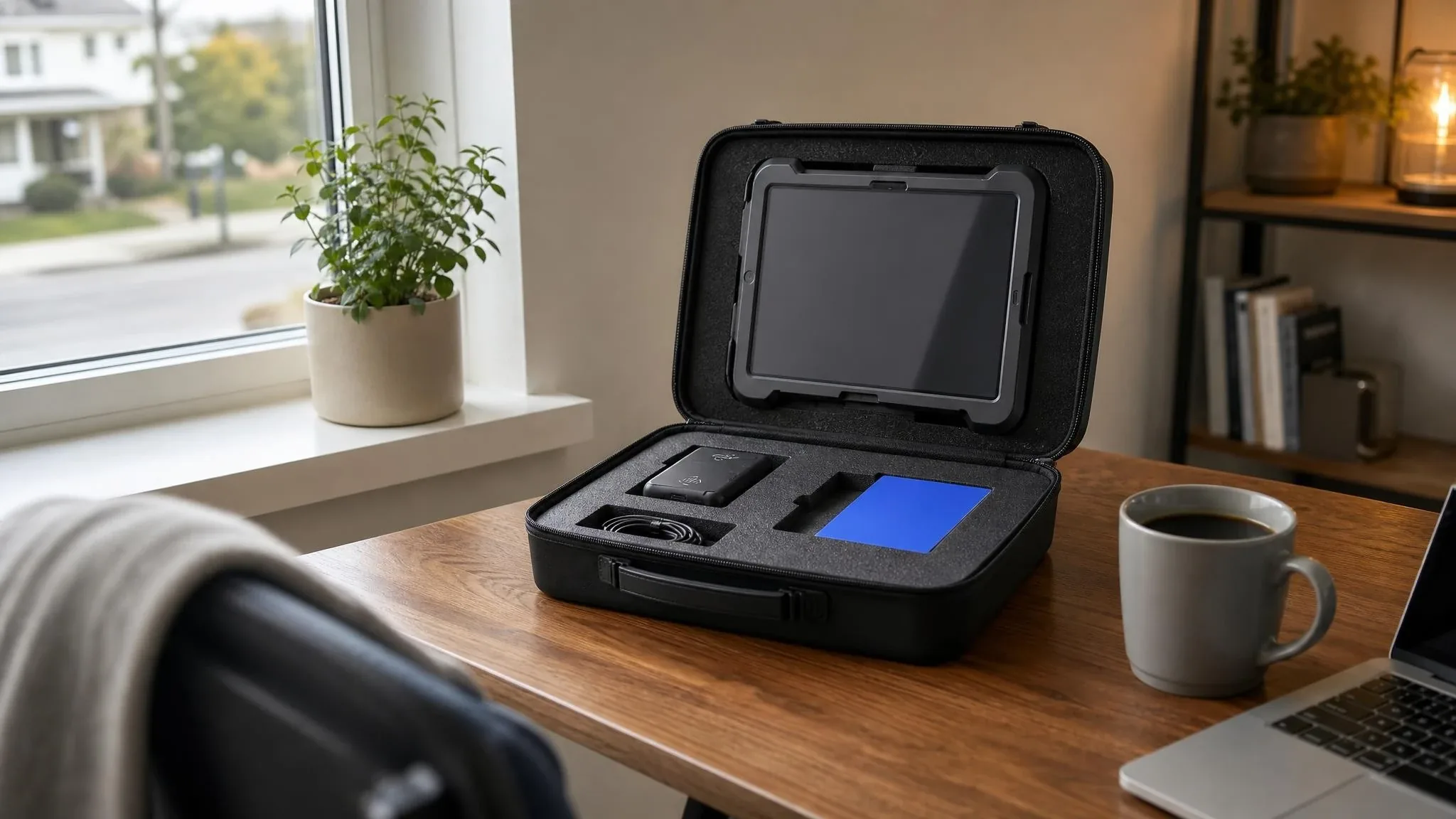
Managed IAL3 Kit
Trust Swiftly ships, configures, and manages the proofing hardware. Your team focuses on mission execution while we handle device logistics, updates, and support.
-
Pre-configured device shippedReady to proof on arrival — no IT setup required.
-
Remote lifecycle managementFirmware, app, and security updates pushed automatically.
-
Return and redeployDevices rotate between sites as mission needs shift.

Office Kiosk
Portable, tamper-evident stations for field offices, enrollment centers, and satellite locations. Designed for supervised, high-throughput proofing at the point of need.
-
Rapid site activationPlug-and-proof at any location with power and network.
-
Supervised sessionsOn-site agents ensure chain of custody and anti-spoofing compliance.
-
Portable between locationsMove kiosks as demand shifts across offices and regions.

Government-Owned & Operated
Agencies supply their own approved hardware and internal verification agents. Trust Swiftly provides the proofing software, workflow engine, and evidence pipeline.
-
Agency-supplied hardwareUse your own devices to minimize supply chain risk.
-
Internal staffing modelYour cleared agents conduct proofing interviews in-house.
-
Full operational sovereigntyHardware, personnel, and data remain under agency control.
All three models run on the same platform, produce the same NIST SP 800-63A-4 IAL3 evidence artifacts, and deploy to FedRAMP-authorized cloud infrastructure or on agency-owned systems. Start with Managed IAL3 Kits for a pilot, then transition to Government-Owned & Operated as your program scales. Need people productive sooner? Run instant IAL2 pre-enrollment in parallel while IAL3 kits are in transit — one workflow engine delivers both assurance levels.
Three approaches to federal identity proofing — only one keeps PII inside a controlled boundary
Federal buyers need a proofing model that satisfies NIST 800-63, supports Executive Order 14028 (Zero Trust), and deploys without a multi-year ATO cycle.
| Capability | Legacy PIV/CAC | Traditional Cloud SaaS | Trust Swiftly |
|---|---|---|---|
| Speed to verify | Weeks to months — hardware-dependent, fixed-site enrollment. | Days, but PII must leave the agency boundary. | IAL2 in minutes; IAL3 as soon as the IAL3 Kit arrives. |
| Data sovereignty | On-prem but inflexible, hardware-locked, and expensive to scale. | Multi-tenant; biometric PII exits the agency environment. | Runs inside a FedRAMP-authorized cloud or your own boundary, so PII stays under controlled custody. |
| ATO timeline | Inherited from existing infrastructure, but rigid and slow to adapt. | 12–18 months for a new ATO on an external platform. | Can inherit controls from the hosting boundary; the ATO decision stays with the agency. |
| Anti-spoofing & deepfake defense | In-person reduces deepfake risk, but requires fixed-site enrollment. | Basic liveness on uncontrolled devices — vulnerable to injection. | Continuous anti-spoofing on controlled hardware with supervised sessions. |
| Deployment coverage | Fixed-site only — remote and field populations are excluded. | BYOD/uncontrolled devices with no hardware assurance. | IAL3 Kits, Office Kiosks, or BYOH/BYOA: one platform for all. |
| Equitable access | Varies by enrollment office — no standardized accessibility. | Depends on vendor; accessibility varies. | Kit-based proofing at home enables homebound and disabled applicants to verify without traveling to fixed sites. |
| Supply chain & hardware risk | Proprietary "black-box" hardware with opaque global supply chains and high vendor lock-in. | Uncontrolled BYOD with zero hardware assurance. | Hardware-agnostic. Deploy on fully transparent COTS or agency-owned devices (GFE) for zero supply chain mystery. |
| Resiliency & maintenance | Fragile, single points of failure. Requires expensive vendor break-fix contracts and extended downtime. | Relies on end-users to troubleshoot their own consumer devices. | Modular components can let internal IT replace approved standard parts through normal maintenance processes. |
From pilot to mission-wide deployment, without a custom build
Federal buyers need technology that protects the mission from day one — plus a practical path to evaluate, pilot, procure, and scale from managed deployments into government-owned operational models without standing up a brand-new proofing program.
- Start with a pilot to validate workflow, evidence collection, and travel savings before broader deployment.
- Expand from IAL3 Kits or Office Kiosks into BYOH/BYOA when agencies want to reuse government-owned hardware and internal staff.
- Support agencies, system integrators, and prime contractors that need one NIST SP 800-63A-4 IAL3 proofing model across multiple user populations.
- Procure directly or through established government contract vehicles, including GSA Schedule, NASA SEWP, and ITES-SW2.
Reseller or systems integrator? See FedRAMP High IAL3 partnerships. Security reports and company data: security and procurement.
GSA Schedule • NASA SEWP • ITES-SW2 •
Direct Award
Trust Swiftly • UEI C7SJPE48R338 • CAGE 9JE90
Download
the capability statement (PDF) (opens in a new tab)
Frequently asked by federal buyers
Federal Identity Proofing Resources
Go deeper on NIST SP 800-63A-4 IAL3 proofing, FedRAMP High deployment, and counter-infiltration strategy with research and guidance from the Trust Swiftly team.
Modernize identity proofing before infiltration, IP theft, or remote fraud compromises your mission
If your team is evaluating NIST SP 800-63A-4 IAL3 proofing, a FedRAMP High (Class D) deployment, or a BYOH / BYOA operating model, we can help you compare options, shape a pilot, and map the right buying path.