NIST IAL3 Identity Proofing for FedRAMP High, Delivered to Any Desk
Attended NIST SP 800-63A-4 IAL3 proofing aligned to FedRAMP High (Class D) for high-risk users, remote hires, contractors, and privileged access. Ship Remote Kits from the largest dedicated IAL3 fleet or deploy office kiosks. A trained Trust Swiftly agent attends every session, and your 3PAO receives a signed evidence package.
Need to validate the workflow? Request a pilot kit.
Federal agency or contractor buyer? See the federal identity proofing page.
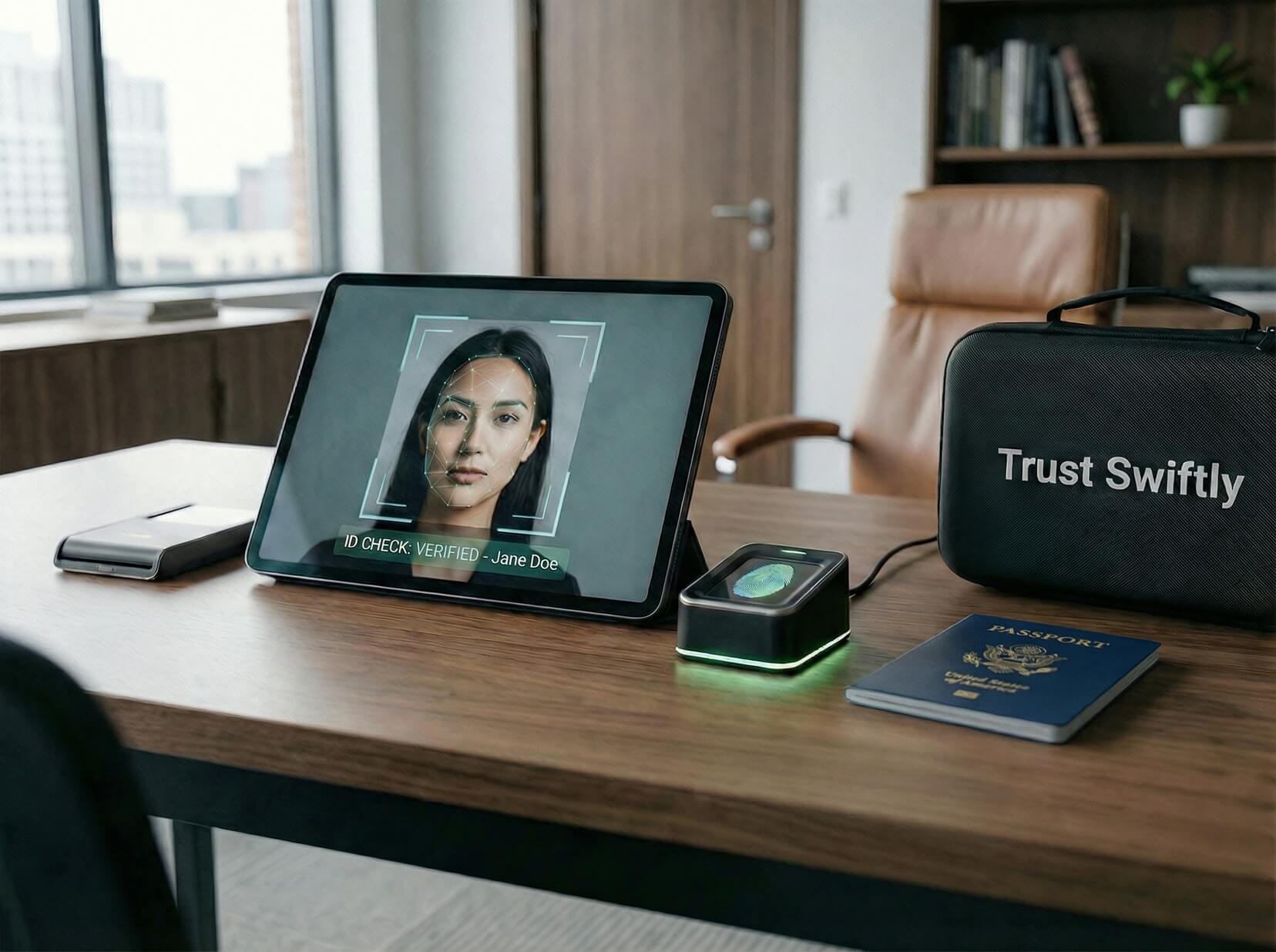
- 200+
- Controlled IAL3 proofing units, the largest dedicated fleet
- 50 states, 32+ countries
- Kits ship to homes and offices, no fixed enrollment center
- Every session
- Attended live by a trained Trust Swiftly agent
- Zero
- Session data stored on the device; evidence is sealed server-side
Why enterprise teams choose Trust Swiftly for IAL3
3PAO-Ready Evidence Package
Built for review, not screenshots. Capture chain-of-custody records, session metadata, document evidence, and operator actions in one package your security team can map to IAL3 controls.
Enterprise Security Posture
Support regulated deployment requirements with documented controls, external security attestations, and configurable evidence retention.
What a Customer Told Gartner
“They sent IAL 3 Identity packages to our homes. We didn’t have to drive 4 hours to stand in front of a kiosk for 10 minutes.”
CloudOps Engineering Manager, verified Gartner Peer Insights review of an IAL3 rollout for a FedRAMP High authorization.
The Enterprise Deployment Path for High Assurance
Coordinate hardware, proofing sessions, evidence capture, and reviewer access from one platform.
Your team gains defensible identity assurance without building a bespoke proofing operation.
Managed Logistics
Coordinate shipping, tracking, return flows, and device readiness so distributed users can complete high-assurance proofing without travel-heavy scheduling.
Cryptographic Certainty
Go beyond visual inspection with hardware-assisted capture, liveness checks, face-to-document comparison, and NFC chip validation where supported.
FedRAMP High Aligned
Support FedRAMP High (Class D) and other regulated environments with evidence packages, retention controls, and deployment patterns that security reviewers can inspect.
Scale or Segment: Two Ways to Deploy IAL3 Proofing
Choose the proofing model that matches your population, risk tier, and security boundary.
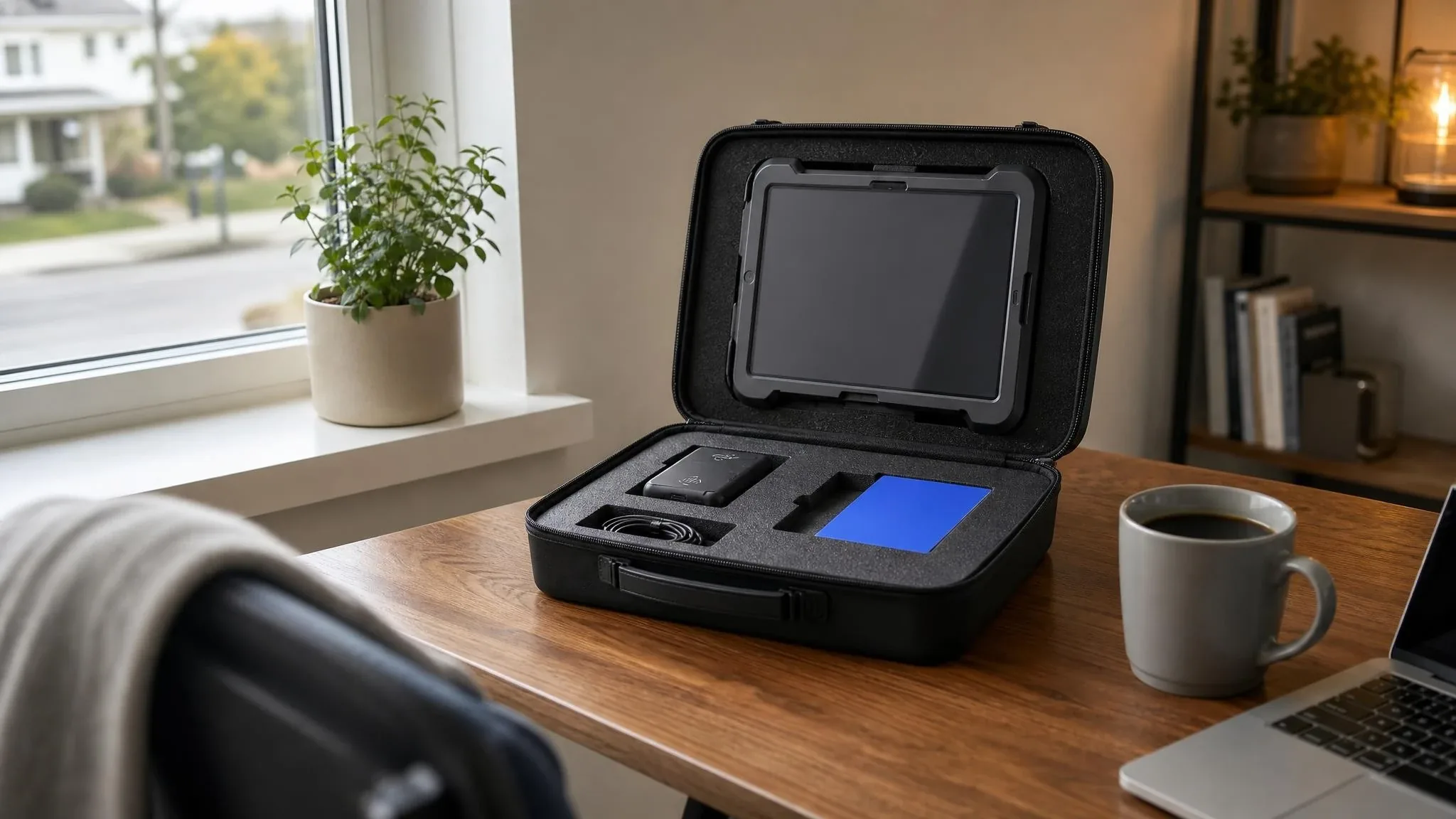
For Distributed Teams and Remote Hires
Use managed controlled hardware for attended proofing of rural, remote, or work-from-home users across the United States.
-
Step 1: Secure Chain of Custody. We track and mail the cryptographically secured kit directly to the verified individual.
-
Step 2: Verify. User joins a <15 min supervised video session from home.
-
Step 3: Return. User applies the prepaid label and drops it off.

For HQ and High-Volume Sites
Turn your private rooms or a designated office into a verification center. Ideal for onboarding cohorts, SCIF access, and hybrid employees.
- Rapid Throughput: Verify large user groups each day with an on-site deployment.
- Flexible Hardware: Choose "Fixed" (bolt-down) or "Portable" (lock-away) units.
- Network Isolation: Operates on guest Wi-Fi/5G, air-gapped from your corporate network.
A More Defensible Model for IAL3 Identity Proofing
Compare travel-heavy enrollment with a controlled, hybrid proofing workflow built for distributed enterprises.
| Capability | Traditional Methods (Manual/Travel) | Trust Swiftly (Controlled Hybrid) |
|---|---|---|
| Deployment Speed | Weeks (Schedule travel/appointments) | Days (Overnight shipping / On-site) |
| Geographic Coverage | Limited to major cities | Remote-kit and kiosk coverage across the United States |
| Cost Structure | Unpredictable (Fee + Travel Stipends + Lost Hours) | Flat & All-Inclusive (Hardware + Logistics + Service) |
| Data Security | Public environments / Retail stores | Hardware-Anchored Trusted Path |
| Verification Tech | Manual Review / Basic Scanning | NFC Cryptography + Liveness Detection |
| Audit Trail | Paper-based / Disconnected | Centralized, tamper-evident evidence records |
| NIST 800-63A Status | Difficult to Audit/Manual | Hardware-controlled evidence workflow |
Why BYOD-Only Proofing Creates IAL3 Audit Risk
NIST SP 800-63A-4 raises the control bar: IAL3 proofing requires attended proofing and a defensible capture environment.
When the user controls the phone, webcam, operating system, or camera feed, security teams have a harder time defending the chain of custody. Controlled hardware helps reduce injection, replay, and deepfake risk.
The Uncontrolled Device Gap
Software-only flows are harder to defend against virtual camera injection, replayed media, and device tampering when the applicant controls the endpoint.
The Controlled Capture Path
A controlled capture path gives reviewers stronger evidence of device custody, session integrity, operator supervision, and document authenticity.
Frequently Asked Questions
How can remote IAL3 proofing work under NIST 800-63A-4?
NIST SP 800-63A-4 allows IAL3 attended proofing where the proofing agent may be remote if the session uses a CSP-controlled kiosk or device. Trust Swiftly supports that model with controlled hardware, supervised sessions, chain-of-custody records, and evidence your security team can review with its assessor.
Can we use both Remote Kits and Office Kiosks?
Absolutely. Most enterprise clients use Kiosks for HQ staff and Remote Kits for distributed workers. All data flows into a single dashboard for unified auditing.
What happens if a user does not have a Passport?
We support alternative pathways including Real ID Driver's License + Secondary Strong Evidence (like a Permanent Residence Card), fully automated via our guided agent session.
Who manages the In-Office Kiosk?
We handle the software and security remotely via our management technology. You designate an on-site "Custodian" (like an Office Manager) to ensure physical safety and power. Temporary setups also are available to avoid management on-site.
How does the cost compare to in-person retail kiosks?
Trust Swiftly can reduce total operational burden by removing travel-heavy appointments, mileage coordination, and fragmented evidence collection.
We offer a predictable deployment model that can cover hardware, logistics, and the supervised session so teams can compare full program cost instead of only per-check fees.
What evidence does NIST 800-63A rev 4 require for IAL3?
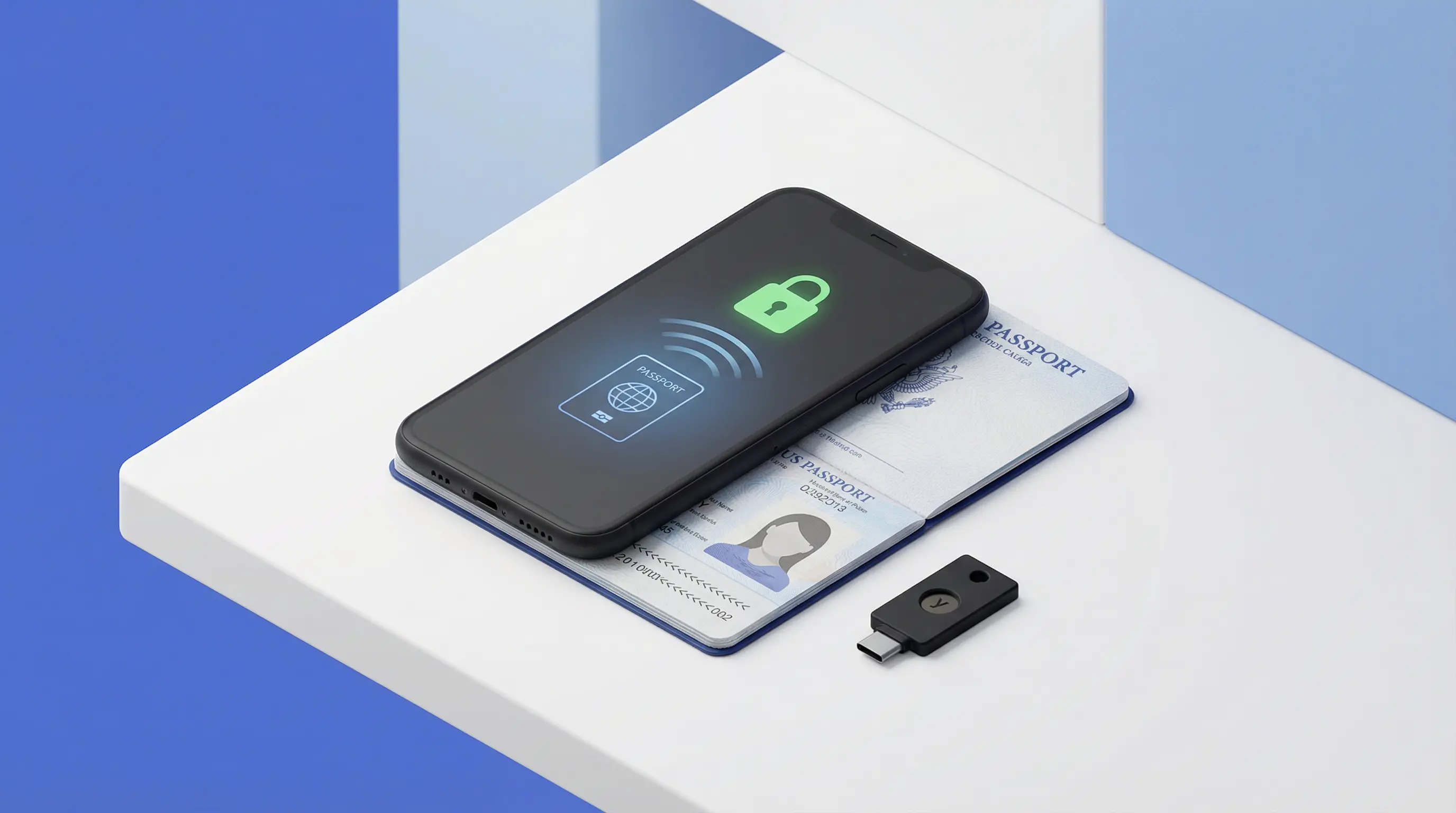
Under NIST 800-63A rev 4, IAL3 carries the same evidence threshold as IAL2: one piece of SUPERIOR evidence, or two pieces of STRONG evidence, or one STRONG plus one FAIR. A SUPERIOR document such as an NFC ePassport satisfies the bar on its own, while a Real ID driver's license paired with a second strong document also qualifies. What elevates the process to IAL3 is the attended, supervised proofing session and mandatory biometric retention. Knowledge-based verification is not accepted as proofing evidence.
How does AAL3 hardware-authenticator binding work after proofing?
Once the supervised IAL3 proofing session confirms the person, we bind a phishing-resistant hardware authenticator to the verified identity. This anchors every future login to the same cryptographic key, so authentication reaches AAL3 and the verified identity cannot be reused or replayed by someone else. The binding happens inside the same trusted session, keeping the chain of custody intact from proofing through ongoing access.
Does FedRAMP High require IAL3?
FedRAMP guidance maps its High baseline to Digital Identity Level 3, which corresponds to NIST IAL3, AAL3, and FAL3. Programs pursuing FedRAMP High, Class D under FedRAMP 20x, therefore need IAL3-grade identity proofing for the users in scope and evidence a 3PAO can review. Trust Swiftly delivers that proofing remotely and hands over the signed evidence package.
Review the IAL3 Operating Model in Depth
See the best-practice case for zero-travel kits, global coverage, in-office deployment, approved-location proofing, and recurring re-verification for proxy-employee risk.
Related IAL3 Research
Go deeper on the standards, controls, and audit evidence behind NIST 800-63A IAL3 verification.
Start Your FedRAMP High IAL3 Pilot
Not ready for a full rollout? We scope a pilot within one business day and ship Remote Kits to your first users, so your compliance and security stakeholders test the real workflow.