Every offer: identity verification
Check each candidate who receives an offer with a government ID, an NFC chip read where the document has one, and selfie liveness, aligned to NIST IAL2.
Workforce identity
Confirm that the person you interview, hire and give access to is the same person: identity checks at the offer stage, and attended NIST IAL3 for privileged roles.
A background check confirms that an identity has a clean record; it can’t tell you whether the person on the video call owns that identity.
The FBI warns that North Korean IT workers apply with stolen identities, pay U.S. facilitators to sit job interviews and verify fraudulent identities, and use AI face-swapping in video interviews. Its advice is identity verification during interviewing, onboarding and throughout employment. Our report on North Korean IT workers and laptop farms covers how these schemes work.
Know Your Employee (KYE) checks close that gap in steps: verify every candidate at the offer stage, and hold privileged roles to on-site attended NIST IAL3.
NIST ties the identity assurance level to the harm a false identity could do, so most teams use two levels.
Check each candidate who receives an offer with a government ID, an NFC chip read where the document has one, and selfie liveness, aligned to NIST IAL2.
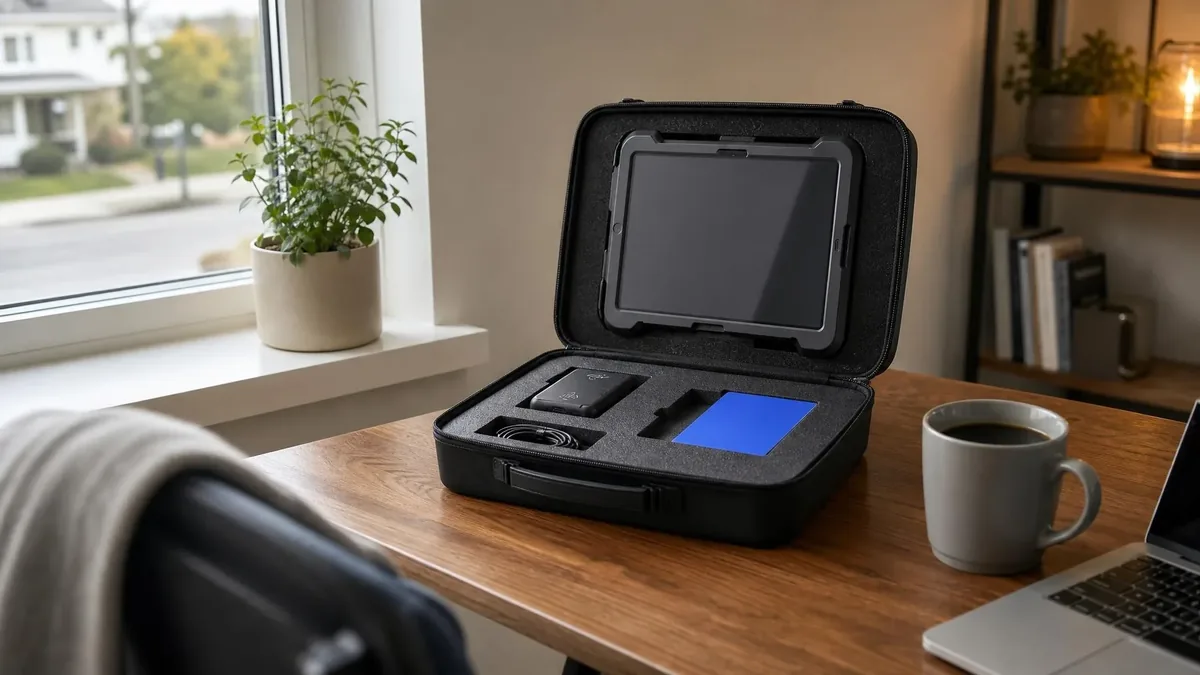
Administrators, engineers with production access and cleared staff complete an on-site attended session on an IAL3 Kit at an approved office or home, or at an Office Kiosk. A trained agent attends every session.
The phishing-resistant hardware key is enrolled during the attended IAL3 session, so the person who was proofed is the person who holds the key.
Re-verify at role changes, account recovery and risk signals, so access stays with the person you hired.
Send the candidate a verification link with the offer. Trust Swiftly checks the ID and liveness and returns a decision and evidence to your HR system through the API and webhooks.
Run your background check against the identity you just verified, so the record and the person match.
An IAL3 Kit ships to the new hire’s approved office or home, or they visit an Office Kiosk. Kits ship to all 50 states and 32+ countries.
A trained proofing agent attends by video, the evidence is validated, a biometric is retained and the hardware key is enrolled. Sessions typically take 3 to 10 minutes once the kit or kiosk is in place.
The signed evidence package reaches your IAM and HR systems, and re-verification runs at role changes, recovery and risk events.
Each IAL3 session produces a signed evidence package that supports FedRAMP High (Class D) identity proofing under IA-12, the persistent personnel verification FedRAMP proposes in RFC-0036 (KSI-IAM-MPI), and personnel screening for defense contractors under NIST SP 800-171 3.9.1. Assessors can request the IAL3 conformance mapping under NDA.
No. NIST ties the identity assurance level to the impact of the access (SP 800-63-4, Section 3.3). Most teams verify every candidate at the offer stage and reserve on-site attended IAL3 for privileged and high-risk roles.
No. IAL3 is on-site attended on devices the provider controls. The new hire uses an IAL3 Kit shipped to an approved office or home, or an Office Kiosk, and a trained agent attends the session by video.
Typically 3 to 10 minutes once the kit or kiosk is in place.
The FBI recommends identity verification during interviewing, onboarding and throughout employment. An attended session with a retained biometric and a bound hardware key makes it much harder for a paid stand-in to pass verification and hand over access.
Tell us about the roles and locations involved, and we will scope an IAL3 pilot within one business day.